
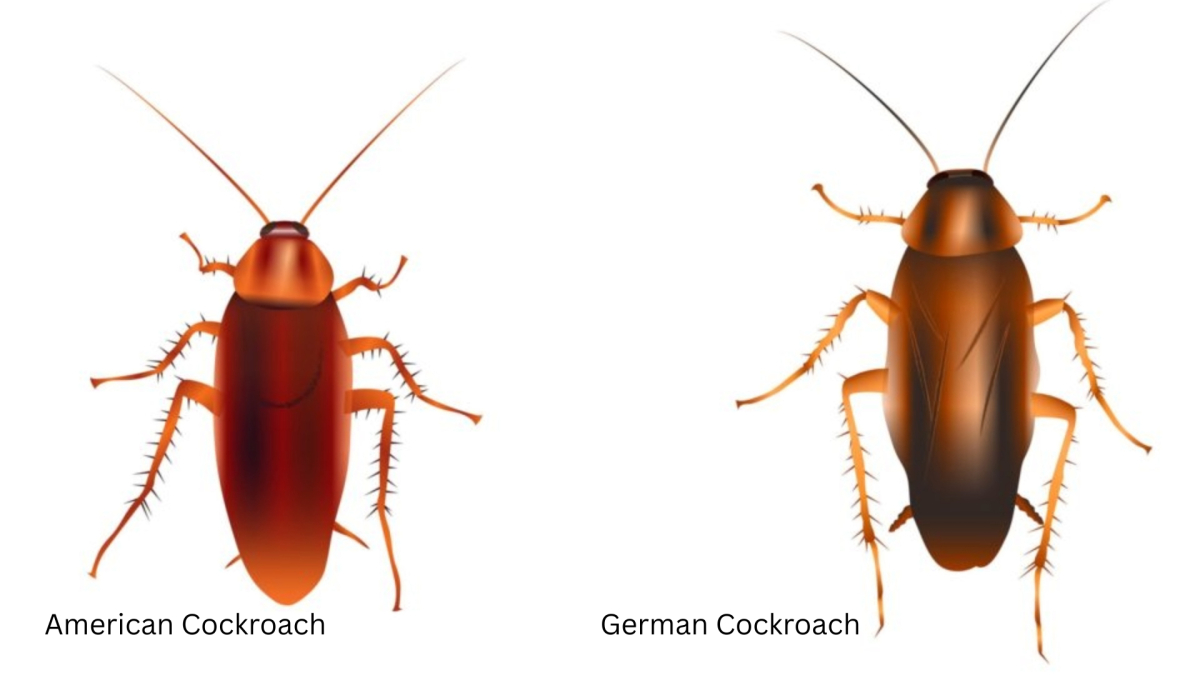
Not all cockroaches are the same, and the differences matter more than most people realize. The two you're most likely to encounter in North Carolina, the German cockroach and the American cockroach, look different, behave differently, and call for different responses. Telling them apart is the first step toward getting rid of them.
Quick Summary
- German cockroaches are small (about half an inch), light brown, with two dark stripes behind the head, and they live indoors.
- American cockroaches are large (up to two inches), reddish-brown, and prefer warm, damp areas like crawl spaces and drains.
- German roaches breed fast and are the harder of the two to control, often signaling a real infestation.
- American roaches, sometimes called palmetto bugs, are more often occasional invaders from outside.
- Correct identification points to the right treatment. When in doubt, contact us for an inspection.
Meet the Two Most Common Cockroaches
Both species thrive in North Carolina's warm, humid climate, but they occupy different corners of your home and life. The German cockroach is the classic indoor pest, the one associated with kitchens, infestations, and rapid spread. The American cockroach is the giant that startles you in the basement or scuttles out of a drain, more often wandering in from outside.
Knowing which one you have changes everything about how you deal with it. A stray American roach is a nuisance. A German roach sighting usually means many more are hidden nearby.
How to Tell Them Apart
The quickest way to identify a cockroach is size and markings. Here's a side-by-side comparison:
|
Feature |
German Cockroach |
American Cockroach |
|
Size |
About 1/2 inch |
1.5 to 2 inches, the largest common roach |
|
Color |
Light brown to tan |
Reddish-brown |
|
Markings |
Two dark parallel stripes behind the head |
Yellowish figure-8 pattern behind the head |
|
Where it lives |
Indoors: kitchens, bathrooms |
Warm, damp areas: crawl spaces, drains, basements |
|
Flight |
Rarely flies |
Can glide short distances |
|
Nickname |
German roach |
Palmetto bug, water bug |
If you're seeing small, striped, light-brown roaches in the kitchen, you're almost certainly dealing with German cockroaches. If it's a large reddish-brown insect near a drain or in the crawl space, that's an American cockroach.
Signs of a Cockroach Problem
Roaches are secretive, so you'll often notice the evidence before the insects themselves. Common signs include:
- Live roaches scattering when you turn on a light, especially in the kitchen at night
- Small dark droppings that look like coffee grounds or ground pepper, often in cabinets and drawers
- A musty, oily odor in heavier infestations
- Egg cases, small brown capsules tucked into cracks and corners
- Shed skins near hiding spots
With German roaches in particular, seeing them during the day suggests the population is large enough that they're being crowded out of hiding. That's a signal to act quickly rather than wait.
German Cockroaches: Small, Fast, and the Bigger Problem
German cockroaches are the ones pest professionals worry about most. They reproduce astonishingly fast, with a single female and her offspring capable of producing thousands in a year under the right conditions. They stay indoors, close to food, moisture, and warmth, which is why kitchens and bathrooms are their favorite haunts.
Their speed of reproduction is exactly why they're so hard to control. By the time you see a few in the open, many more are hidden in cracks, behind appliances, and inside cabinets. Retail sprays often make things worse here, because many are repellent based and scatter the roaches deeper into wall voids and adjacent rooms rather than eliminating them.
American Cockroaches: Big, Startling, and Usually Outdoors
American cockroaches are the largest roaches you're likely to see indoors, and their size makes them alarming even though they're often just visitors. They prefer warm, damp environments and are commonly found in crawl spaces, basements, sewers, drains, and mulch beds. In our area, people often call them palmetto bugs or water bugs.
They typically wander indoors from outside, especially in hot or wet weather or when their outdoor harborage is disturbed. Because moisture draws them, a damp crawl space is a common entry point. Addressing that moisture with crawl space encapsulation and moisture control makes a home far less attractive to them.
Other Cockroaches You Might See in NC
German and American roaches get the headlines, but they aren't the only species in North Carolina. You may also run into:
- Oriental cockroaches, dark and moisture-loving, often near drains and damp basements
- Smokybrown cockroaches, large and drawn to mulch, gutters, and wood piles
- Brown-banded cockroaches, small like German roaches but with banded markings, found in warmer, drier upper areas of rooms
Correct identification narrows down where they're coming from and how to stop them, which is why a professional set of eyes is helpful when you're not sure.
Why Cockroach Identification Matters
Beyond the ick factor, cockroaches are a genuine health concern. Their droppings, shed skins, and saliva are known allergens that can trigger asthma, particularly in children, and they can spread bacteria across surfaces and food. German roaches, given their indoor habits and numbers, pose the greater ongoing exposure.
The response differs by species too. German roach infestations call for targeted indoor treatment and sanitation, while American roaches often call for addressing moisture and exterior entry points. Guessing wrong wastes time and lets the population grow.
How to Keep Cockroaches Out
Prevention is mostly about removing food, water, and easy access. A few habits make a real difference:
- Clean up crumbs and spills promptly, and store food in sealed containers.
- Fix leaks and reduce moisture, since roaches need water and gravitate to damp areas.
- Take out trash regularly and keep bins closed.
- Seal cracks, gaps around pipes, and entry points along the foundation.
- Keep mulch, wood piles, and yard debris away from exterior walls.
These steps won't undo an active infestation on their own, but they make your home far less inviting and help any treatment hold longer. For American roaches especially, controlling moisture is one of the most effective long-term defenses you have.
How Holloman Handles Cockroaches
We start by identifying the species and finding the source, because that's what determines the fix. For German roaches, that means targeted treatment of the areas they hide and breed, along with guidance on the sanitation steps that keep them from returning. For American roaches, it often means tackling moisture and sealing the ways they get in.
Our roach control service is backed by more than 70 years of local experience, and we keep our recommendations honest and pressure-free. There's no long-term contract, and we're 5-star rated on Google for good reason. If roaches have you unsettled, we'll tell you exactly what you're dealing with and how to handle it.
Frequently Asked Questions
What's the main difference between German and American cockroaches?
Size and habitat. German cockroaches are small (about half an inch), striped, and live indoors, while American cockroaches are large (up to two inches), reddish-brown, and prefer warm, damp areas like crawl spaces and drains.
Which cockroach is worse to have?
German cockroaches are generally the tougher problem. They breed rapidly indoors and are hard to eliminate, so a few sightings often mean a hidden infestation. American roaches are more often occasional invaders.
What are palmetto bugs?
Palmetto bug is a common local nickname for the American cockroach, and sometimes for other large roaches. They're the big reddish-brown ones people find near drains, in crawl spaces, or outdoors.
Do cockroaches cause health problems?
Yes. Cockroach droppings and shed skins are allergens that can trigger asthma, especially in children, and roaches can spread bacteria. Controlling them is a health matter, not just a comfort one.
Can I get rid of German cockroaches myself?
It's difficult. German roaches breed fast and hide well, and many retail sprays scatter them rather than eliminate them. Professional treatment targeted to their harborage is usually needed to fully clear an infestation.
Do cockroaches fly?
Some do, in a sense. American cockroaches can glide short distances, and a few other species fly, while German cockroaches rarely fly at all. Most of the time you'll see them running rather than flying.
How long do cockroaches live?
It varies by species, but American cockroaches can live around a year or more, and German cockroaches a few months. Combined with fast reproduction, that longevity is why an untreated infestation keeps growing.
The Bottom Line
German and American cockroaches may share a name, but they're different pests with different habits and different solutions. German roaches are small, indoor, and fast-breeding, making them the harder problem, while American roaches are large, moisture-loving, and usually visitors from outside. Identifying which you have is the key to getting rid of them.
Not sure what's scurrying across your floor? We'll figure it out and handle it. Send Us a Message or Call Now: (910) 892-7438.