
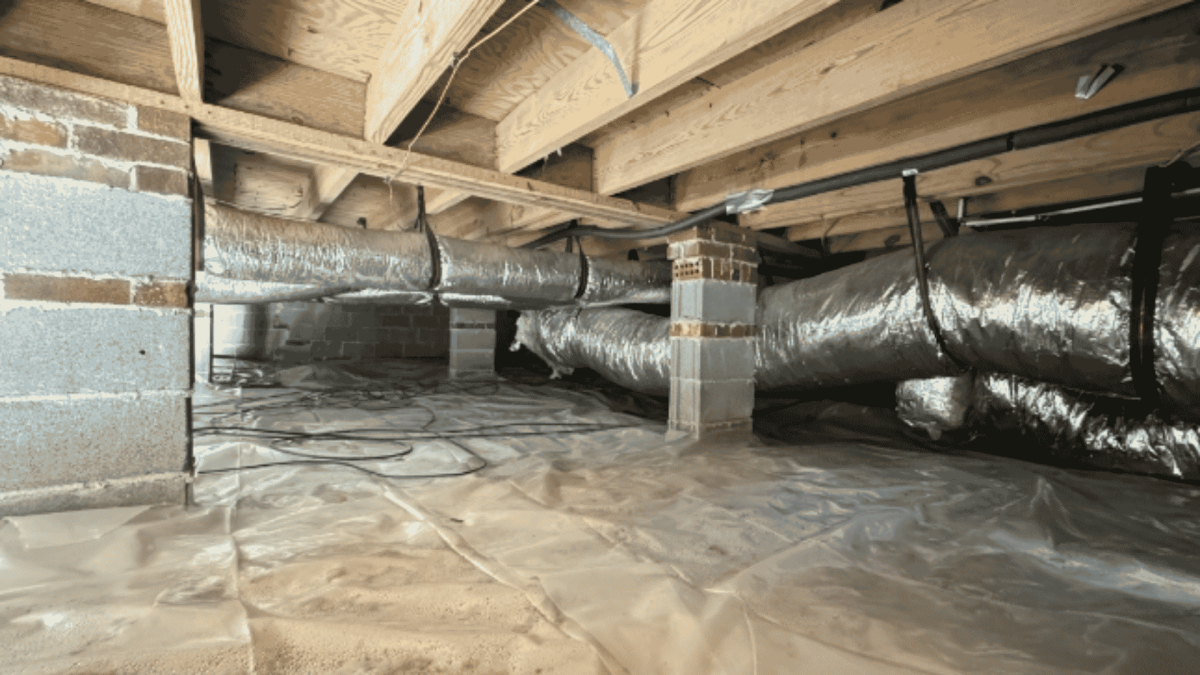
A damp crawl space is one of those problems that stays out of sight and out of mind, right up until it shows up as musty air, fungal & mold growth, soft floors, or a pest problem you can't shake. In Lillington, where the Cape Fear River and our humid climate keep the ground moisture high, crawl spaces work against a home more than most homeowners realize. Encapsulation and moisture control fix the problem at its source, protecting your home's structure, your air, and your comfort.
Holloman Exterminators has protected Harnett County homes since 1954, and moisture control is a natural part of that work. If your crawl space has ever felt damp, smelled musty, or you've simply never had it checked, we'll give you an honest look at where it stands.
What Crawl Space Encapsulation Actually Is
Encapsulation means sealing your crawl space off from the ground moisture and outside humidity that cause trouble. Rather than leaving bare dirt and open vents, we line the floor and walls with a heavy-duty, reinforced moisture barrier, seal the seams and vents, and create a clean, dry, controlled space beneath your home. In many cases, a dedicated dehumidifier keeps the humidity in check year-round.
Not sure if it’s working? We’ve got you covered. Every encapsulation includes a smart monitor with sensors for your crawl space, the outside, and the inside of your home. You’ll get real-time readings on your home’s temperature and humidity levels right at your fingertips. It’s our way of proving that your system is doing its job.
It's a meaningful step up from the thin plastic sheeting many older homes have, which barely slows moisture down. A properly encapsulated crawl space stays dry, and a dry crawl space is the foundation of a healthier home above it.
Signs Your Crawl Space Has a Moisture Problem
Most moisture problems announce themselves if you know what to look for. Watch for these signs:
- A musty or damp smell, especially on humid days or when the HVAC kicks on
- Floors that feel soft, springy, or uneven
- Hardwood that cups, buckles, or gaps
- High humidity indoors that's hard to control
- Condensation on windows, ducts, or pipes
- Visible mold, mildew, or a general dampness in the crawl space
- More pests than usual, since moisture draws them
- Rising energy bills as your system works harder against damp air
Noticing even one or two of these is worth an inspection. They tend to get worse, and more expensive, the longer they go unaddressed.
Why Moisture Is Such a Problem in Lillington
Lillington sits along the Cape Fear River, and the combination of a high water table, river-bottom humidity, and North Carolina's warm, wet seasons keeps ground moisture high across much of the area. Add in the vented crawl spaces common under older homes, which were designed to let air flow but often just let humidity in, and you have a recipe for chronic dampness.
That's not a knock on these homes. It's simply the reality of building over moist soil in a humid climate, and it's exactly the problem encapsulation is designed to solve.
What a Damp Crawl Space Does to Your Home
The trouble with crawl space moisture is that it doesn't stay in the crawl space. Damp wood invites wood-destroying fungus and rot that weaken joists, beams, and subflooring over time, and that same moisture is a magnet for termites and other pests. Because air moves upward through a home, the musty, humid, sometimes mold-laden air in the crawl space rises into your living areas, affecting the air your family breathes.
On top of the structural and health concerns, all that dampness makes your home harder and costlier to keep comfortable. Humid air is harder to cool, so your HVAC runs longer and your bills climb. Left alone, a wet crawl space quietly chips away at your home's structure, air quality, comfort, and value all at once.
What's Included in Our Moisture Control and Encapsulation
Every home is a little different, so we tailor the work to what yours actually needs after an inspection. A typical project can include:
- Installation of a durable vapor barrier and moisture barrier across the floor and up the walls
- Sealing crawl space vents and gaps to keep humid outside air out
- Drainage solutions, including a sump system, where standing water is an issue
- A dedicated dehumidifier to hold humidity at a healthy level
- Fungus remediation to address existing wood-destroying fungus
- Insulation improvements where they make sense
The goal is a sealed, dry, and stable crawl space that stops fueling the problems above it.
The Benefits You'll Notice
Encapsulation isn't just a behind-the-scenes fix. It pays off in ways you can feel, including:
- Fresher, less musty air in your living space
- Floors that feel solid rather than soft or bouncy
- Easier-to-control indoor humidity and better comfort
- Lower energy bills as your HVAC stops fighting damp air
- Strong protection against wood rot, fungus, and structural damage
- A crawl space that's far less inviting to termites and other pests
- Better protection of your home's long-term value
Encapsulation and Pest Control Go Together
Here's the connection many homeowners miss: moisture and pests go hand in hand. A damp crawl space is one of the biggest draws for subterranean termites, roaches, and rodents, so drying it out is one of the most effective long-term forms of pest prevention there is. It's why so many of our termite and pest customers end up addressing moisture too.
As a full-service company, we can look at the whole picture rather than treating these as separate problems. If termites are a concern, our termite control page explains how the two fit together, and you can read more about our broader moisture control work as well.
Why Lillington Homeowners Choose Holloman
Crawl space work is a bigger decision than a routine pest treatment, so trust matters even more. We give honest assessments and recommend only what your home actually needs, with no scare tactics and no upselling. The owners are in the business every day, we've protected Harnett County homes since 1954, and we're 5-star rated on Google.
Being local means we understand the moisture challenges specific to this area, and being family-owned means we stand behind our work. There's no pressure and no long-term contract, just a straight answer about your crawl space and what, if anything, it needs.
Frequently Asked Questions
What's the difference between a vapor barrier and full encapsulation?
A basic vapor barrier is sheeting laid over the crawl space floor to slow ground moisture. Full encapsulation seals the floor and walls, closes the vents, and often adds a dehumidifier to create a dry, controlled space. Encapsulation is far more effective at solving persistent moisture problems.
How do I know if my crawl space needs encapsulation?
Musty odors, soft or uneven floors, high indoor humidity, condensation, visible mold, and more pests than usual are all signs of a moisture problem. An inspection is the surest way to know, and we're glad to take a look.
Does crawl space encapsulation help with pests?
Yes. Moisture is a major draw for termites, roaches, and rodents, so a dry, sealed crawl space is far less inviting to them. Encapsulation is one of the more effective long-term pest deterrents available.
Is crawl space encapsulation worth it?
For homes with ongoing moisture issues, it usually is. The payoff shows up in healthier air, more comfortable floors, lower energy bills, fewer pests, and protection against costly structural damage. We'll give you an honest read on whether your home would benefit.
How long does the work take?
It depends on the size and condition of the crawl space and what the project includes, but many encapsulation jobs are completed in a matter of days. We'll give you a clear timeline after inspecting your home.
Protect Your Lillington Home From the Ground Up
A dry crawl space protects everything above it, from the structure to the air your family breathes. If yours feels damp, smells musty, or has never been evaluated, the sooner you address it, the less it can cost you. Reach out on our contact page. Send Us a Message or Call Now: (910) 892-7438.