
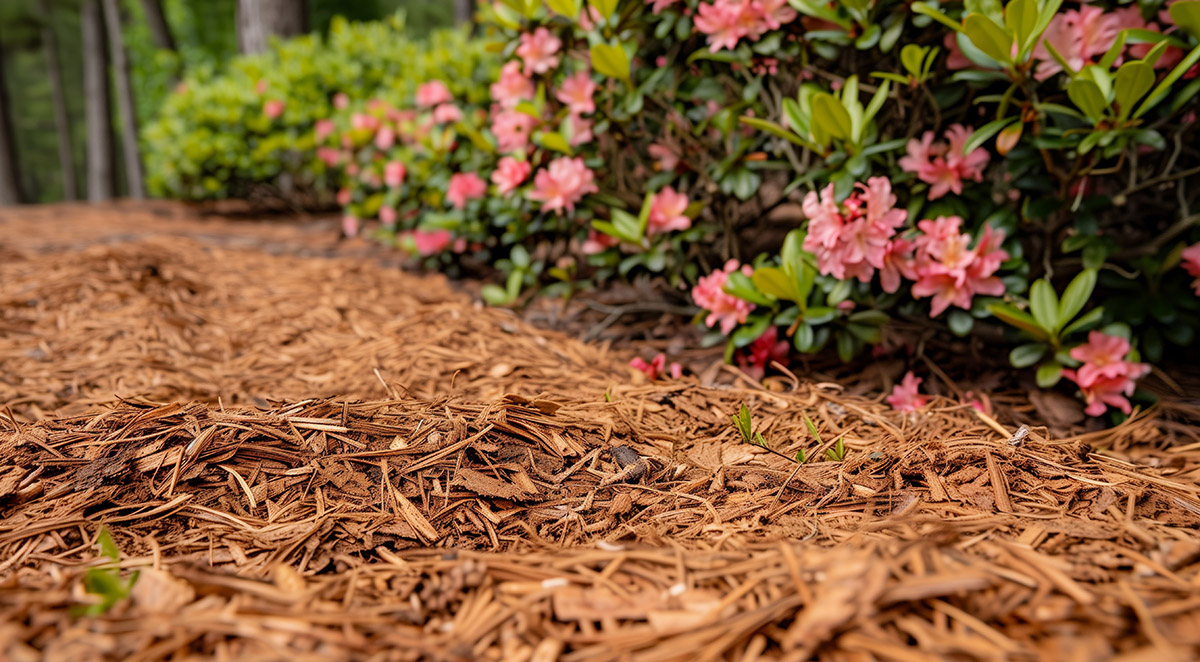
Mulch is one of the easiest ways to make a yard look finished, hold in moisture, and keep weeds down. But if you've ever spread a fresh layer near your foundation and wondered whether you're rolling out a welcome mat for termites, you're asking a smart question. The short answer is that mulch doesn't create termites, but the wrong mulch in the wrong spot can make your home a lot more attractive to them.
Here in central North Carolina, subterranean termites are active nearly year-round, and they thrive in the exact damp, shaded conditions that mulch is designed to create. That doesn't mean you have to give up landscaping. It just means a few simple choices around your foundation can make a real difference.
Quick Summary:
- Mulch doesn't spawn termites, but it holds moisture and provides cover that draws them toward your foundation.
- Wood-based mulches piled against siding or spread too deep are the biggest risk.
- Cypress heartwood, cedar, and melaleuca, along with non-wood options like gravel or rubber, are lower risk.
- Keep mulch a few inches off the foundation, no more than two to three inches deep, and pulled back from siding and weep holes.
- North Carolina's humidity makes moisture management around the home especially important.
- An annual professional inspection is the most reliable way to catch subterranean termites early.
Does Mulch Actually Attract Termites?
Termites aren't drawn to mulch the way ants are drawn to a picnic. What they're really after is moisture, shelter, and a food source, and certain mulches happen to offer all three. When mulch sits against your foundation, it holds water in the soil and creates a cool, dark corridor that termites love to travel through.
So the mulch itself is rarely the root cause of an infestation. It's more accurate to say that poorly placed mulch removes the barriers that would normally keep termites out in the open, where they're exposed and vulnerable. That subtle shift is what turns ordinary landscaping into a real risk factor.
How Mulch Creates Termite-Friendly Conditions
Understanding the "why" makes the prevention steps much easier to follow. It comes down to three things termites can't resist.
Moisture Retention
Subterranean termites need constant moisture to survive, and mulch is very good at holding it. A thick bed of damp mulch against your foundation keeps the soil below it consistently wet, which is exactly the environment these termites look for.
That trapped moisture can also wick toward wood siding, sill plates, and framing. Once wood stays damp, it becomes both easier to chew and more appealing as a target.
Ground Contact and Hidden Pathways
Termites build mud tubes to travel from the soil to their food while staying hidden from view. A deep mulch layer gives them natural cover to move around undetected, right up against the parts of your home they most want to reach.
When mulch touches siding or climbs above the foundation line, it can even let termites bypass the visible inspection zone entirely. That's why pest professionals always want a clear band of foundation showing above the soil and mulch.
Cellulose as a Food Source
Wood-based mulches are made of cellulose, the same material termites eat in your home's framing. Fresh wood chips won't sustain a large colony on their own, but they can support foraging workers and keep termites lingering near the structure.
The concern isn't that termites will feast on your flower beds. It's that the mulch keeps them fed, sheltered, and close enough to eventually find the wood that really matters.
Which Mulches Are More (and Less) Termite-Friendly
Not all mulch carries the same risk, and choosing wisely is one of the easiest preventive steps a homeowner can take.
Higher-Risk Mulches
These tend to hold moisture, break down quickly, or provide easy cover:
- Fresh, undyed wood chips in thick layers
- Large bark nuggets that trap water underneath
- Any wood mulch piled directly against the foundation or siding
Lower-Risk and Termite-Resistant Options
Certain materials are naturally less inviting:
- Cypress heartwood and cedar, which contain compounds termites tend to avoid
- Melaleuca mulch, which resists both termites and decay
- Pine straw, which drains well and doesn't hold as much ground moisture
- Non-organic choices like pea gravel, crushed stone, or rubber mulch near the foundation
A common approach is to use a strip of gravel or stone in the first band next to the house, then transition to your preferred mulch farther out in the beds. You get the look you want without inviting trouble right where it counts.
Smart Mulching Practices for NC Homeowners
You don't have to choose between a nice yard and a protected home. A few habits keep the benefits of mulch without rolling out the welcome mat:
- Leave a gap of at least six inches, and ideally more, between mulch and your foundation or siding.
- Keep mulch no deeper than two to three inches so it doesn't stay soggy.
- Never bury weep holes, vents, or the bottom edge of siding under mulch.
- Refresh and turn mulch periodically so it dries out instead of compacting into a damp mat.
- Direct downspouts and grade the soil so water drains away from the house, not into the beds.
These same steps help with the broader moisture problems that plague homes in our region, from damp crawl spaces to slow wood rot. Managing water is the common thread that ties good landscaping and good pest prevention together.
Why North Carolina's Climate Raises the Stakes
Harnett County and the surrounding area sit squarely in a high-pressure termite zone. Our warm, humid summers and mild winters give subterranean termites a long active season and plenty of the moisture they depend on.
That same humidity is why so many local homes deal with damp crawl spaces and elevated wood moisture. Managing water around and under your home is one of the best long-term defenses, which is why moisture control and termite protection so often go hand in hand. If you've had recurring dampness, our crawl space encapsulation and moisture control work is worth a look alongside a termite plan.
When to Call a Professional
Mulch management is great prevention, but it can't tell you whether termites are already at work. Subterranean termites often go unnoticed for years because they stay hidden inside wood and behind walls.
A professional inspection uses an integrated pest management approach: we look at moisture, conducive conditions like mulch and wood-to-ground contact, and any active signs, then recommend only what your home actually needs. Our team has protected homes across the area for more than 70 years, and the same familiar faces come back season after season, so we get to know your property. You can learn more about our termite control services or reach out through our contact page to schedule a look.
Frequently Asked Questions
Will removing mulch get rid of termites?
No. Pulling mulch away from the foundation removes the cover and moisture that make your home attractive, but it won't eliminate a colony already living in the soil or your structure. If termites are present, you'll need a professional treatment to address them directly.
How far should mulch be from my foundation?
Aim for at least six inches of clear space between mulch and the foundation or siding, and more is better. That visible band lets you and your inspector spot mud tubes early, and it keeps damp material off the wood.
Is rubber or rock mulch safe from termites?
Non-organic options like rubber mulch, pea gravel, and crushed stone don't feed termites and don't hold moisture the way wood does, so they're a lower-risk choice right next to the house. Many homeowners use stone in the first band by the foundation and organic mulch farther out in the beds.
Does mulch cause termites in a brand-new home?
Mulch doesn't create termites, but a new home isn't immune. Fresh construction still sits on the same termite-friendly soil, so smart mulching and a professional inspection are just as important for newer homes as older ones.
How often should I have a termite inspection in NC?
For our climate, an annual inspection is a sound baseline, and homes with a history of activity or moisture issues may benefit from more frequent checks. Regular monitoring is the most reliable way to catch subterranean termites before they cause costly damage.
The Bottom Line
Mulch is a helpful part of a healthy landscape, and you don't have to give it up to protect your home. The real goal is keeping moisture, cover, and wood contact under control right where your foundation meets the soil.
If you're not sure whether your setup is inviting trouble, let us take a look. We're a family-owned company that's stayed honest and transparent with our neighbors for decades, and we're happy to tell you straight whether you have a real problem or just a landscaping tweak to make. Reach out through our contact page, and ask about bundling termite and general pest protection when you call.