
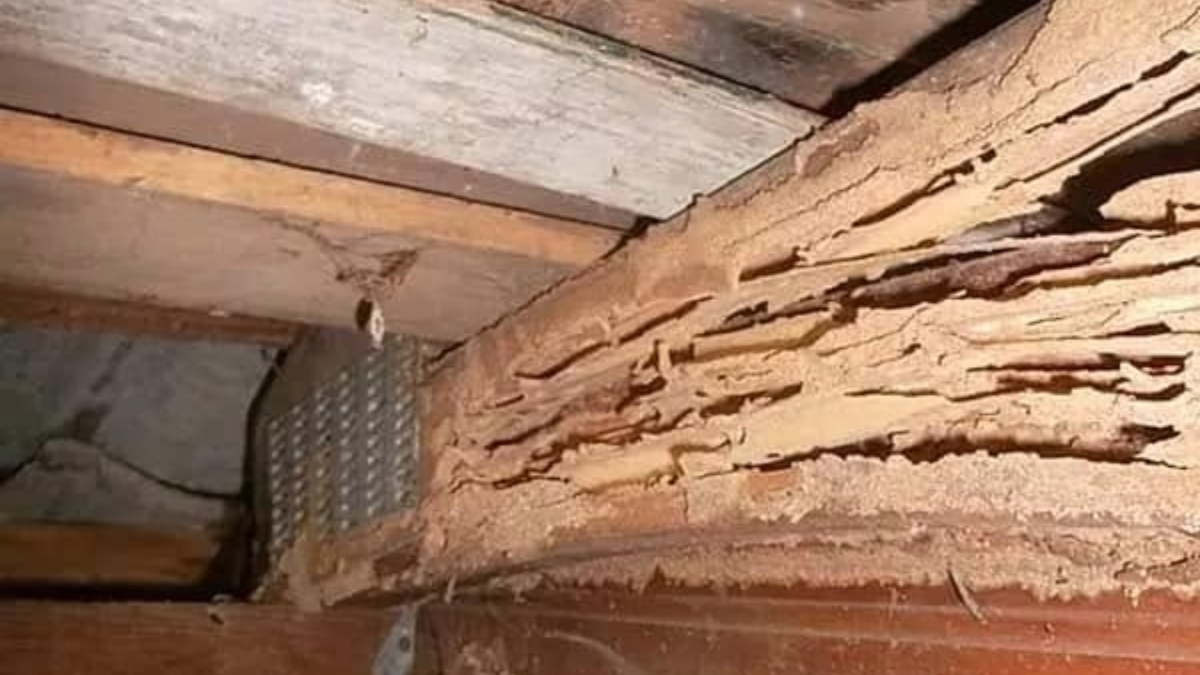
Termites are the pest most homeowners never see until the damage is done. They work quietly, out of sight, often for years, which is exactly what makes them so costly. The homeowners who catch them early aren't luckier than everyone else. They just know what to look for.
If you own a home in Harnett County or anywhere across our service area, learning the warning signs is one of the smartest, cheapest forms of protection you have. Here's how to read them.
Quick Summary
- Termites hide well, so most infestations are found by their signs rather than the insects themselves.
- The clearest signs are mud tubes, discarded wings, hollow-sounding wood, small piles of droppings (frass), and warped or bubbling paint.
- Crawl spaces, foundation lines, and areas with moisture are the places to check first.
- Most termites in our area are subterranean, meaning they travel up from the soil.
- If you spot even one of these signs, contact us for an inspection before the damage grows.
Why Termites Are So Easy to Miss
Subterranean termites, the most common type in our region, live in the soil and travel into a structure through hidden entry points. They avoid open air and light, so they rarely show themselves during normal daily life. By the time you'd notice them casually, they've usually been active for a while.
They also feed from the inside out. A piece of framing or a floor joist can look perfectly sound on the surface while being largely hollowed out within. That combination of secrecy and slow, internal feeding is why annual inspections are the reliable safety net, and why knowing the signs in between matters so much.
The Most Common Signs of Termites
You don't need to be an expert to catch termites early. You just need to know what a handful of specific clues look like. Watch for these.
Mud Tubes
Subterranean termites build pencil-width tunnels of mud and saliva to travel between the soil and their food while staying protected. You'll most often find these tubes running up foundation walls, crawl space piers, and along the base of exterior surfaces. Intact, moist-looking tubes suggest active feeding.
Discarded Wings
After a spring swarm, reproductive termites shed their wings in piles. Look on windowsills, near doors, in cobwebs, and around light sources. A small heap of identical, teardrop-shaped wings is one of the most dependable signs of nearby activity.
Hollow-Sounding Wood
Because termites eat wood from within, affected framing, trim, or flooring can sound hollow or papery when tapped. In advanced cases, a screwdriver or firm knuckle will push right through a surface that should be solid.
Frass (Termite Droppings)
Some termites leave behind frass, tiny pellets that can resemble sawdust or coffee grounds and often collect in small mounds near infested wood. If you find an unexplained pile of grit that keeps reappearing after you sweep it up, take note.
Warped Wood, Bubbling Paint, and Sagging Floors
Moisture from termite activity can cause paint to bubble or peel, doors and windows to stick, and floors to feel soft or uneven. These symptoms are easy to blame on humidity or age, so they're often overlooked until they're widespread.
Where to Look in a North Carolina Home
Termites go where wood meets moisture, so a few areas deserve extra attention. Start low and work outward:
- Crawl spaces, especially around piers, sill plates, and any spot that stays damp.
- The foundation perimeter, where mud tubes are easiest to spot.
- Around plumbing, water heaters, and anywhere leaks have occurred.
- Exterior wood in contact with soil, such as deck posts, fence lines, and porch supports.
- Window and door frames, where shed wings tend to collect.
Because moisture and termites go hand in hand, a damp crawl space is both an invitation and a warning sign. Addressing moisture is part of long-term protection, which is why crawl space encapsulation and moisture control often go together with termite work.
Subterranean vs. Drywood Termites
Most of what we treat in our area is subterranean, meaning the colony lives in the soil and needs contact with the ground or a moisture source. These are the termites that build mud tubes and are drawn to damp conditions. Understanding that helps you know where to look, since the ground level and crawl space are the front lines.
Drywood termites, which nest directly inside dry wood without soil contact, are far less common here but not impossible. Correct identification changes the treatment approach, which is one more reason a professional inspection beats guesswork.
How Do Termites Get Into a Home?
Subterranean termites almost always start from the soil and work their way up. They enter through cracks in the foundation, gaps around plumbing and utility lines, expansion joints, and any point where wood sits close to or touches the ground. They're small enough to exploit an opening you'd never notice.
Once inside, they follow the wood. Sill plates, floor joists, subflooring, and wall studs are all on the menu, and the colony extends its mud tubes to keep a protected path back to the soil and moisture it depends on. This is why an inspection focuses on the crawl space and foundation line first: that's where the story usually begins.
What Attracts Termites, and How to Make Your Home Less Inviting
You can't termite-proof a house through housekeeping alone, but you can remove the conditions that roll out the welcome mat. A few practical habits make a real difference:
- Keep moisture down. Fix leaks promptly, direct downspouts away from the foundation, and address any crawl space that stays damp.
- Break wood-to-soil contact. Keep firewood, lumber, and mulch away from the foundation, and watch deck posts and fence lines.
- Improve drainage and ventilation so the soil against your home isn't perpetually wet.
- Store cardboard, paper, and scrap wood off the ground and away from the house.
Because damp wood and standing moisture are such strong draws, controlling them is a genuine part of termite defense rather than a side project. A dry, well-managed crawl space is a much harder target, which is why moisture work through crawl space encapsulation so often goes hand in hand with termite protection.
Termites vs. Carpenter Ants: A Common Mix-Up
Homeowners frequently confuse termites with carpenter ants, and telling them apart points you toward the right response. Carpenter ants don't eat wood; they excavate it to nest, pushing out coarse, sawdust-like shavings. Termites eat the wood itself and leave behind mud and frass rather than clean shavings.
The insects look different too. Termites have straight bodies, straight antennae, and four equal wings, while ants have a pinched waist, bent antennae, and front wings longer than the back pair. Both warrant attention, but termites tend to do more structural damage over time, so a confident identification matters.
How Much Damage Can Termites Really Do?
The frustrating answer is a lot, and slowly enough that you may not notice until repairs are significant. Because they target structural wood, termites can compromise framing, subfloors, and support beams over time. Homeowners insurance typically does not cover termite damage, which makes early detection and ongoing protection your best financial defense.
The math tends to favor prevention heavily. A routine inspection is a small, predictable cost. Rebuilding a damaged floor system is neither small nor predictable.
Spring is the natural time to run your own quick check, since that's when swarms and shed wings appear and when moisture from winter is still lingering in crawl spaces. A five-minute walk of your foundation line and a look at the crawl space a couple of times a year is enough to catch most early signs. Pair that habit with a professional inspection once a year, and you've built a simple, low-cost routine that catches problems while they're still small.
What to Do If You Suspect Termites
If you've spotted even one warning sign, a measured response works best:
- Don't disturb the area. Avoid breaking mud tubes or probing damaged wood, since it can scatter activity.
- Document what you found. Photos and a saved sample of wings or frass help with identification.
- Skip the retail sprays. Repellent products often push termites deeper and complicate professional treatment.
- Schedule an inspection. This is the step that turns a suspicion into a plan.
How Holloman Inspects and Treats
We've protected Harnett County homes since 1954, and a careful termite inspection is where every job starts. Our technicians check the crawl space, foundation, and known trouble spots, then give you an honest, plain-language read on what's happening. If treatment is warranted, we recommend a clear approach, whether that's a liquid barrier, bait stations, or a combination.
Customers tell us the experience is refreshingly straightforward, and that's on purpose. You'll see familiar faces because our turnover is low, and Steve, Cole, and Drew are involved in the business every day. We're 5-star rated on Google and were voted Best Pest Control in Harnett County in 2025 by the Daily Record.
A few things worth knowing:
- We provide WDI (Wood Destroying Insect) reports for real estate closings. If you're buying or selling, our Realtors page explains how that works.
- We offer no long-term contracts, monthly payment options, and bundles that pair termite protection with quarterly pest service.
- We handle new construction pre-treatment for homeowners and builders across the growth corridor.
Frequently Asked Questions
Can I tell if I have termites without a professional?
You can spot the warning signs yourself, which is exactly why knowing them matters. Confirming an active infestation, its type, and its extent takes a trained inspection. Think of your own checks as the early alarm and the inspection as the diagnosis.
Are termite droppings dangerous to my family?
Frass is not considered a significant health hazard, but it's a clear sign of activity that shouldn't be ignored. The real risk is the structural damage occurring alongside it.
How often should I have my home inspected?
An annual inspection is the standard recommendation for early detection, since termites can be active for a long time before signs appear. Homes with a history of activity or persistent moisture may benefit from ongoing monitoring.
Do you offer termite letters for real estate transactions?
Yes. We provide WDI reports that most lenders require during a home purchase. Contact us as early in the process as possible so timing isn't a scramble at closing.
Does a damp crawl space really attract termites?
Moisture is a major draw for subterranean termites and can accelerate wood decay on its own. Controlling crawl space moisture is a meaningful part of long-term protection, which is why it often pairs with termite service.
What is a termite bond, and do I need one?
A termite bond is an agreement with a pest control company for ongoing termite protection, typically including regular inspections and a commitment to address activity that shows up during the term. Many homeowners value the peace of mind, and bonds can matter during a real estate transaction. We're happy to walk you through the options and what makes sense for your home.
Can termites go away on their own?
No. A termite colony won't abandon a reliable food source on its own, and activity that seems to stop is usually just out of sight. Untreated colonies keep feeding, which is why professional treatment is the only dependable resolution.
How quickly do termites cause damage?
Damage builds gradually rather than overnight, but it accumulates steadily and can become significant over months and years of undetected feeding. The slow pace is exactly what makes early detection and annual inspections so valuable.
The Bottom Line
Termites reward the homeowners who pay attention. Mud tubes, shed wings, hollow wood, frass, and warping paint are all signals worth acting on, and catching just one of them early can save you a major repair later. When in doubt, get a professional look rather than hoping the problem sorts itself out.
If something in your home has you wondering, we're glad to take a look. Send Us a Message or Call Now: (910) 892-7438.