
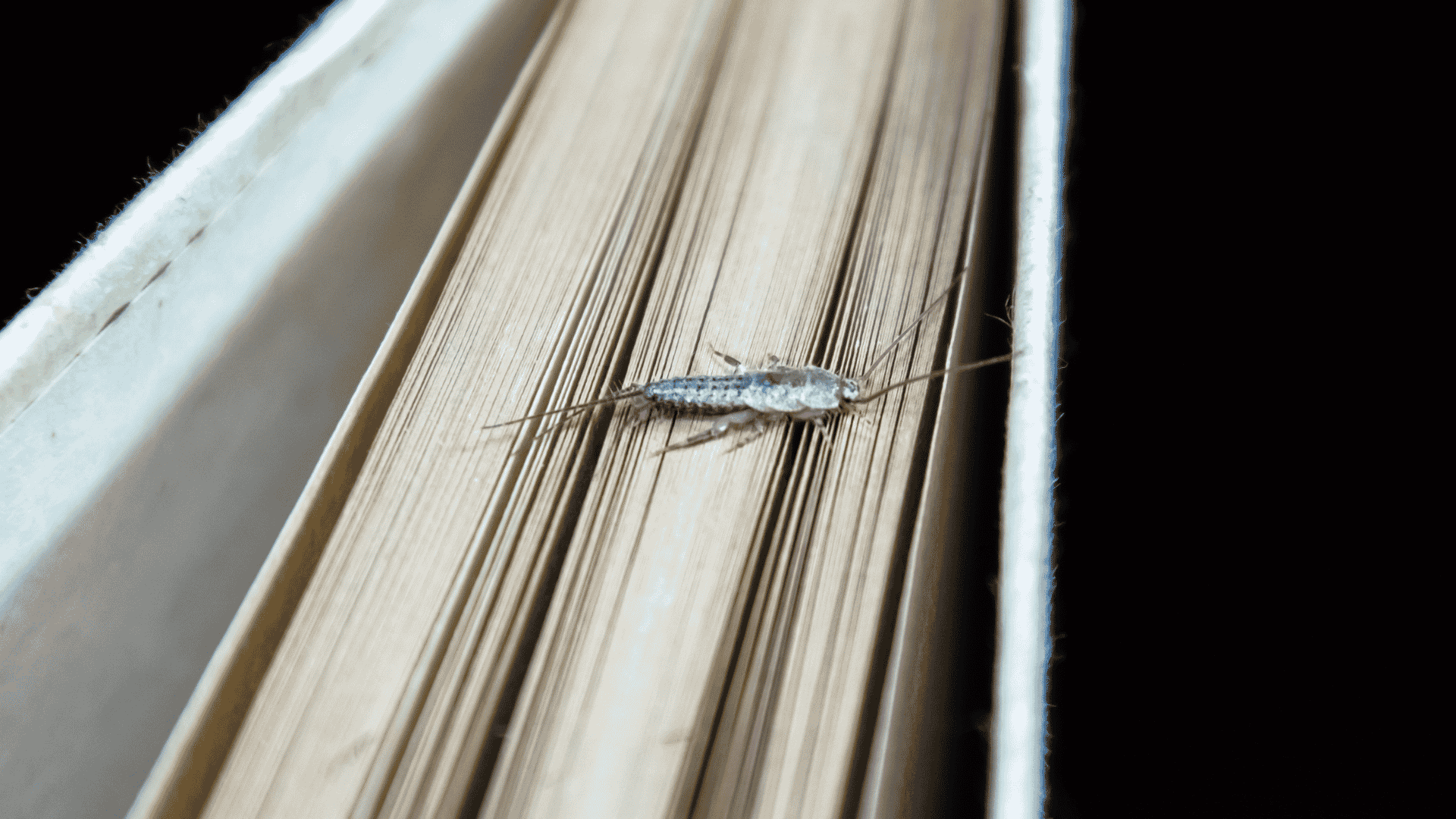
Flip on the bathroom light at midnight and something bolts across the floor: that jolt is real, and you want to know what it was. In many North Carolina homes, the answer is a silverfish or a house centipede. They look nothing alike once you know what to check, they eat very different things, and one of them often shows up because the other one is there. Here's how to tell them apart, whether either one can hurt you or your house, and what actually makes them go away.
Quick Summary:
- Silverfish are small (about ½ to ¾ inch), silvery, carrot-shaped insects with three tail bristles and no visible legs from a distance.
- House centipedes are bigger and leggy: a 1 to 1½ inch yellowish body with three dark stripes and 15 pairs of long, banded legs.
- Silverfish don't bite, sting or spread disease, but they chew paper, book bindings, wallpaper paste, cardboard, fabric and dry foods.
- House centipedes are venomous, but their jaws are so small they rarely break human skin. They're mostly a nuisance.
- Both love damp, dark spaces. Moisture in bathrooms, basements and crawl spaces is the common thread.
- House centipedes hunt silverfish, roaches and spiders, so seeing a lot of them usually means there's a prey problem too.
- Lasting control means drying out the house, sealing cracks and treating the hiding spots, not just squashing what you see.
Silverfish vs. Centipede: How to Tell Them Apart Fast
Most people get only a half-second look before the bug disappears under a baseboard. That's fine. Size, shape and the way it moves are usually enough to make the call.
What a Silverfish Looks Like
A silverfish is a small, wingless insect with a flat body that's wide at the head and tapers toward the tail, a shape NC State Extension describes as "carrot-shaped." Adults run about ½ to ¾ inch long and are covered in light gray to silver scales that give them a metallic sheen. Up front are two long antennae, and out back are three long, thread-like tails.
The legs are short and tucked under the body. From a few feet away, a silverfish looks like a shiny gray sliver, not a creature with legs. Young silverfish look the same, only smaller and whiter.
What a House Centipede Looks Like
The house centipede is the one that makes people yell. According to Penn State Extension, the adult body is only 1 to 1½ inches long, but the legs and antennae make it look 3 to 4 inches across. The body is a dirty yellow with three dark stripes running lengthwise.
The giveaway is the legs. An adult has 15 pairs, long and striped light and dark, plus very long antennae up front and, on adult females, an extra-long last pair of legs out back that can look like a second set of antennae. Young house centipedes have fewer legs, so a small one with fewer pairs is still the same pest.
How Each One Moves
Silverfish move fast in short, darting runs, and they can scoot sideways. Their flat bodies let them slip into cracks you'd barely notice. You'll most often see one in a sink or tub it couldn't climb out of, or when you move a stack of old papers.
House centipedes are fast too, and they don't stay on the floor. They run straight up walls and across ceilings, stop dead for a moment, then take off again toward the nearest dark spot. If it went up the wall, it was almost certainly a centipede.
Side-by-Side Comparison
Here's the quick comparison:
|
Trait |
Silverfish |
House centipede |
|
Size |
About ½ to ¾ inch |
Body 1 to 1½ inches, 3 to 4 inches counting legs |
|
Color |
Silver or gray and shiny |
Yellowish with three dark stripes |
|
Legs |
Short and hidden |
15 pairs, long and banded |
|
Tail end |
Three thin bristles |
Very long last pair of legs (adult females) |
|
Movement |
Darts along floors and into cracks |
Sprints up walls and across ceilings |
|
Diet |
Starches, paper, glue and dry foods |
Other bugs |
Do Silverfish or House Centipedes Bite?
This is the first thing most people ask, and the honest answer is reassuring for both.
Silverfish Are Harmless to People
Virginia Cooperative Extension states that silverfish are harmless to humans and do not bite, sting or transmit diseases. They're classed as nuisance pests. You can pick one up (if you can catch it) and nothing will happen to you.
House Centipedes Are Venomous, But Rarely a Danger
House centipedes do carry venom. They use a pair of modified front legs to grab and subdue the insects they eat. The University of Kentucky notes that the house centipede's jaws are so small it's hard for them to pierce human skin, so the bite hazard is minimal.
If one does manage to bite, usually because someone grabbed it, University of Minnesota Extension says you may see some swelling, but the pain shouldn't be severe. Don't handle them bare-handed, but you don't need to panic over one in the shower. Anyone with a reaction that worries them should call a doctor, the same as with any bite.
Can They Damage Your Home?
Neither one is going to hurt the structure of your house. The damage is to your stuff, and it's mostly a silverfish problem.
What Silverfish Chew On
Silverfish go after starch and sugar, and they'll eat protein too. According to NC State Extension, they're especially drawn to glazed paper and book bindings that contain starch or glue. They also feed on dry pet food and other stored foods.
The usual targets in a North Carolina home:
- Old books, photos, mail and paperwork stored in boxes
- Wallpaper, where they eat through to reach the paste behind it
- Cardboard boxes in closets, garages and storage rooms
- Cotton, linen and other natural fabrics, which can end up with small holes or yellowish stains
- Cereal, flour, pasta and pet food that isn't sealed
The first sign is often the damage itself: notched edges or small holes in paper, ragged book spines, tiny scales or pepper-like specks left behind. If you've got boxes of keepsakes in a damp closet, check them.
Why House Centipedes Don't Damage Anything
House centipedes don't eat wood, paper, food or fabric. They eat other bugs. Penn State lists silverfish, firebrats, carpet beetle larvae, cockroaches and spiders on the menu.
That makes them a sort of free pest control, which is why some people leave them alone. The catch is what they're telling you. If you see house centipedes often, Penn State says it means some prey insect is plentiful in the house, and that may be a bigger problem than the centipedes.
Why They're Coming Inside
Silverfish and house centipedes show up for the same three reasons: moisture, food and shelter. North Carolina's humidity gives them a head start.
Moisture Is the Big One
Silverfish prefer cool, damp areas like bathrooms, basements and rooms full of rarely used stored items. House centipedes hide during the day in dark, damp places and come out at night to hunt. Penn State specifically names crawl spaces under the house as one of their common hiding spots.
Common moisture sources we see around Harnett County homes:
- Damp or poorly ventilated crawl spaces
- Bathroom exhaust fans that don't work or never get turned on
- Slow leaks under sinks, around water heaters and behind washers
- Clogged gutters and downspouts that dump water at the foundation
- Mulch, leaves and soil piled high against the house
Food, and Other Bugs
Silverfish follow paper, starch and crumbs. House centipedes follow silverfish, roaches and spiders. That's why the two so often turn up together: one is the food source, and the other is the hunter.
If roaches are part of the picture, our post on where cockroaches come from covers how they get in. Cut off the prey, and the centipedes have far less reason to stay.
Shelter and Entry Points
Both pests slip through cracks in foundations and slabs, gaps around pipes, and openings under doors and around windows. Indoors, they hide behind baseboards and trim, in wall voids, under stored boxes and in clutter. A house full of cardboard boxes on a damp floor is close to ideal for both.
Do They Go Away in Winter?
Not in a heated home. Penn State notes that house centipedes don't survive winter outdoors in colder states but breed readily inside heated buildings. Silverfish can live their whole lives indoors. In North Carolina, you can see either one any month of the year, including December.
How to Get Rid of Silverfish and House Centipedes
Spraying the one you see won't fix it. Extension experts agree that control comes from a combination of steps, and moisture is the step people skip.
Dry Out the House
Run bathroom fans during and after showers, and fix any that don't work. Repair leaks under sinks and around laundry areas. A dehumidifier in a damp room or basement helps.
Outside, keep gutters clear and downspouts pointed away from the house. Pull mulch and leaves back from the foundation so the soil can dry. These steps take away what both pests need most.
Get the Crawl Space Under Control
For a lot of homes here, the dampness starts underneath. Penn State recommends plastic sheeting on the ground in dirt crawl spaces to cut down moisture, and NC State Extension's mold and moisture checklist calls for a vapor barrier covering crawl space soil.
That's where our crawlspace encapsulation and moisture control services come in. Depending on what we find, that can mean a moisture barrier on the crawl space floor, foundation vent work, a dehumidifier, fungus remediation, or full encapsulation that seals the floor, walls and vents. We'll tell you honestly which level your house needs, and if a moisture barrier is enough, that's what we'll recommend.
A drier crawl space doesn't just help with silverfish and centipedes. It takes away a moisture source that draws termites, wood decay and general pest pressure, too.
Seal Cracks and Cut the Clutter
Caulk gaps around pipes, baseboards, window and door trim, and cracks in the foundation. Add door sweeps and weather stripping where light shows through. Store books, papers, photos and fabrics in sealed plastic bins instead of cardboard, and get them off damp floors.
Keep cereal, flour, pasta and pet food in airtight containers. Vacuum regularly, especially along baseboards and in closets. Fewer hiding spots and less food means fewer bugs.
When to Call a Pro
Call when you're seeing them regularly, when you're finding silverfish damage in stored items, or when house centipedes are showing up in more than one room. Silverfish in particular are hard to wipe out because they hide deep in cracks and wall voids.
A licensed technician can find where they're hiding, look for the prey insects feeding the centipedes, and treat cracks, crevices and voids to label and NC regulations. Then they'll point out the moisture problems that will keep bringing them back if nobody fixes them. That's the part that makes the results last.
Why Homeowners Call Holloman
Holloman Exterminators has been protecting homes from our base in Dunn since 1954. That's more than 70 years of North Carolina bugs, North Carolina humidity and North Carolina crawl spaces. Steve, Cole and Drew Matthews are in the business every day, not running it from somewhere else.
You'll see familiar faces, too. Low turnover means the same technician usually comes back to your home visit after visit, so they already know your house and what's been going on. We're honest about what you need and what you don't, and we're 5-star rated on Google.
Our services cover general pest control, termite control, rodent control, crawlspace encapsulation, moisture control, moisture barriers and fungus remediation. If you want ongoing protection, our service plans and bundles bill as one monthly payment: Advanced (termite plus pest), Elite (pest plus mosquito) and Superior (all three). There are no long-term contracts. We keep customers by doing the job right.
We serve homeowners across Harnett County and the surrounding area, including Lillington, Angier, Anderson Creek, Spout Springs, and the military families along the Fort Bragg and Spring Lake corridor.
Frequently Asked Questions
Is it a silverfish or a centipede if it ran up the wall?
Almost certainly a house centipede. They run fast up walls and across ceilings, stop, then take off again. Silverfish tend to stay low and dart along floors, baseboards and into cracks.
Should I leave house centipedes alone since they eat other bugs?
They do eat silverfish, roaches and spiders, so one now and then isn't a crisis. But a lot of them means there's a lot for them to eat. It's better to fix the moisture and the prey problem than to rely on centipedes to do it.
Can silverfish ruin my clothes or books?
They can damage them. Silverfish feed on paper, book bindings, wallpaper paste and natural fabrics like cotton and linen, leaving holes, ragged edges and yellowish stains. Store keepsakes in sealed plastic bins in a dry spot.
Will a dehumidifier get rid of them?
It helps a lot, because both pests depend on damp conditions. On its own, though, it won't clear an established population. Pair it with sealing cracks, cutting clutter and treating hiding spots, and check whether the dampness is coming from the crawl space.
Does crawl space encapsulation stop silverfish and centipedes?
It isn't a bug treatment, and nobody should promise it will wipe them out. What it does is take away the damp conditions under the house that both pests and their prey thrive in. That makes your home a much less inviting place for them, especially when paired with regular pest control.
Know What You're Dealing With
Silverfish are shiny, small and hard on paper. House centipedes are leggy, fast and hard on other bugs. Neither one is a real danger to your family, but both are telling you something about moisture and hiding spots in your home.
If you're seeing either one more than once in a while, let us take a look. Send Us a Message through our contact page, or Call Now at (910) 892-7438. A familiar face from a family that's been doing this since 1954 will tell you exactly what's going on and what it takes to fix it.