
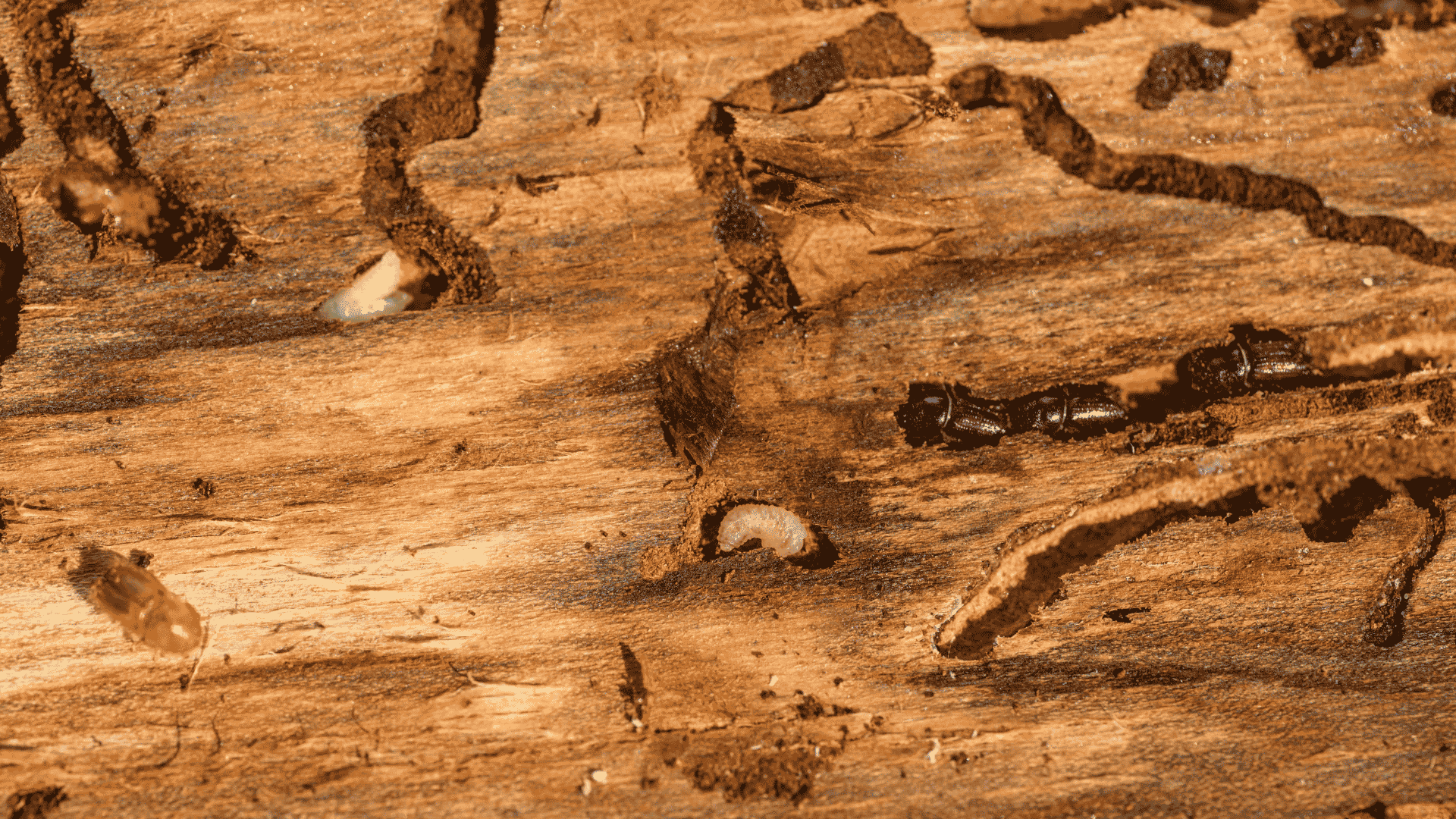
Finding out a house has bugs in the wood is never good news, especially in the middle of a home sale. Here's the truth: wood-destroying insects are common in North Carolina, and most older homes show some evidence of them. What matters is knowing what you're looking at, what the inspection report really says, and what to do next.
This guide covers the insects that count, the signs to watch for, and how the state's official Wood-Destroying Insect Information Report (WDIR) works when you buy or sell a home in Harnett or Cumberland County.
Quick Summary:
- In North Carolina, the main wood-destroying insects are subterranean termites, carpenter ants, carpenter bees, powderpost beetles and old house borers.
- Termites eat wood. Carpenter ants and carpenter bees tunnel through it to nest. Beetle larvae feed inside it for months or years.
- Common signs include mud tubes, discarded wings, small round or oval exit holes, sawdust-like frass and hollow-sounding wood.
- In NC real estate deals, the required report is the state's own form, the WDIR 100. Only a company licensed by NCDA&CS can issue it.
- The WDIR is not a warranty and not a "clearance letter." A clean report isn't required to close.
- Moisture drives most of these problems, so fixing the crawl space is often part of the fix.
What Counts as a Wood-Destroying Insect in NC
A wood-destroying insect is any insect that damages the wood in a structure, either by eating it or by tunneling through it. The NC Department of Agriculture and Consumer Services (NCDA&CS) lists the ones inspectors most often note on real estate reports: subterranean termites, powderpost beetles, old house borers, carpenter ants and sometimes carpenter bees.
Each one works differently. That matters, because the signs, the damage and the treatment are not the same for all of them.
Subterranean Termites
Eastern subterranean termites are found in every county in North Carolina, according to NC State Extension. They live in the soil and travel up into a house through cracks in the foundation, slab joints and anywhere wood touches the ground. NCDA&CS notes they can get through a crack as small as 1/32 of an inch.
Termites eat wood from the inside out, so a joist can look solid while it's hollow inside. They're the biggest reason the WDIR exists. In our area, swarms of winged termites most often show up from spring into summer, and a warm day can bring them out earlier or later.
Carpenter Ants
Carpenter ants don't eat wood. They chew tunnels through it to build and expand their nests. NC State Extension says they prefer wood with a moisture content of 15% or higher, so they usually show up where there's a leak, rot or a damp crawl space.
Inside a home, they nest in wall voids, attics, insulation, hollow doors and around window and door frames. Winged carpenter ants indoors usually mean a nest in or under the house.
Carpenter Bees
Carpenter bees bore perfectly round holes into exposed wood like fascia boards, eaves, decks, porch rails and siding. Like carpenter ants, they don't eat the wood. They dig tunnels to lay eggs, and those tunnels often run six to seven inches long.
One season of carpenter bees is mostly cosmetic. Year after year of bees reusing and extending the same tunnels is how real damage happens, and woodpeckers chasing the larvae can make it worse.
Powderpost Beetles
Powderpost beetles do their damage as larvae, feeding inside the wood where you can't see it. NC State Extension says one group attacks softwoods like pine in floor joists and studs, while another attacks hardwoods like oak in floors, cabinets, trim and antique furniture.
You usually find them by their exit holes, which are tiny and round (about 1/32 to 1/16 of an inch), and by the fine, flour-like powder below them. Yellowed, caked powder is usually old. Fresh, loose powder points to an active problem.
Old House Borers
Despite the name, old house borers mostly attack newer softwood, especially pine framing less than 10 years old, according to University of Maryland Extension. They can also re-infest older wood. That makes them worth knowing about in the newer subdivisions across western Harnett County.
The larvae can live in the wood for two to five years or more. Signs include oval exit holes about 1/4 to 3/8 of an inch across with ragged edges, packed sawdust-like frass and, in spring and summer, a faint rasping or clicking sound from inside the wood.
Signs of Wood-Destroying Insects
Most homeowners never see the insects. They see what the insects leave behind. Here's what to look for around your home:
- Mud tubes about the width of a pencil on foundation walls, piers or floor joists
- Piles of small, discarded wings near windowsills, doors or light fixtures
- Wood that sounds hollow or feels soft when you press on it
- Small round or oval holes in wood, with fine powder or sawdust below them
- Piles of wood shavings that look like pencil sharpener debris, often mixed with insect parts
- Perfectly round holes in fascia, decks or eaves, with sawdust on the ground underneath
- Bubbling or warped paint, sticking doors and windows, or sagging floors
Where to Check First
Start in the crawl space if you have one. Look along the foundation, at the piers and at the sill plate where the house sits on the block. Check anywhere wood touches soil, like porch steps, deck posts and siding that runs below grade.
Then look anywhere water collects. Leaky gutters, a damp crawl space and plumbing leaks all invite termites and carpenter ants. If you want a deeper look at the termite side, our guide on how to tell if you have termites walks through it.
What a WDI Inspection and Report Is in NC Real Estate
Many states use a national form called the NPMA-33. North Carolina is different. The state requires its own form, the North Carolina Official Wood-Destroying Insect Information Report, Form No. WDIR 100. It's adopted by the NC Structural Pest Control Committee, and NCDA&CS calls it the only legal form for reporting wood-destroying insects in a structure that's being sold.
You'll hear people call it a WDI report, a WDIR or a "termite letter." NCDA&CS points out that it's really none of those last two things, because it covers more than termites and it doesn't "clear" a house.
Who Can Issue the Report
Only a person licensed by the NCDA&CS Structural Pest Control Division, or someone working for a licensed company, can issue a WDIR. The state also bars inspectors from issuing a report before they inspect the structure. Holloman Exterminators holds NC license #121-PW, and WDI reports are a regular part of our work.
What the Inspection Covers
The inspection is a careful visual check of all accessible areas of the house, inside and out. The inspector also sounds accessible structural wood, especially near slabs and masonry walls. Attached decks, porches and storage sheds are included. Detached buildings are not, unless you ask.
The report must also list the conditions that invite termites. At minimum, the inspector has to note:
- Wood in direct contact with soil
- Cellulose debris, like scrap wood or cardboard, under the house
- Excessively wet wood (20% moisture or more) in the crawl space or elsewhere
Areas the inspector can't reach are noted on the form. Read that part closely, because problems inside walls or under flooring can't be seen during a visual check.
What the Report Does Not Do
The WDIR reports what was visible on the day of the inspection. It is not a warranty that the house is free of insects. It also isn't a structural damage report, so the inspector doesn't have to say how much damage there is, and it doesn't cover plumbing, electrical or roof problems.
Here's the part that surprises buyers. NCDA&CS says most North Carolina homes over 10 to 15 years old will show some evidence of wood-destroying insects, and that a "clear" report should not be the goal. A clean report isn't required to close.
Who Orders It and When
The WDIR is usually ordered during the buyer's due diligence period, often by the buyer's agent or because the lender asks for it. NCDA&CS recommends getting it early and reading it carefully, including the conditions printed on the back.
For military families buying near Fort Bragg and in Spring Lake with a VA loan, there's one more detail. The standard NC REALTORS FHA/VA Financing Addendum says that if the VA requires a wood-destroying insect inspection at the seller's expense, the seller pays for it, up to the limit in the contract. Ask your agent how that applies to your deal. If you're a realtor working Harnett or Cumberland County closings, our realtors page explains how we handle WDI reports.
What to Do If the Report Finds Something
First, don't panic. Evidence on a WDIR is common, and it doesn't automatically kill a sale. The inspector has to report what was found and exactly where. The buyer and seller then decide together whether to treat and how.
Treatment
The inspector may offer a treatment proposal, but the report's main job is to report. If treatment is done, NCDA&CS requires the written treatment agreement and any warranty to be attached to the WDIR. For termites, the state lists liquid soil treatments and bait systems as the standard options. For beetles, it lists surface treatments and moisture control.
Holloman offers liquid termite treatment, bait station installs with annual service, termite certificates and bonds, and treatment for powderpost beetles and old house borers. If you need a full picture of our termite work, see our termite control services.
Repairs
If insects were found in the wood, NCDA&CS says some damage has to be assumed. Pest control inspectors generally aren't qualified to judge how bad it is. A qualified builder or engineer should look at it, and their repair invoice can be attached to the report.
Fix the Moisture
Termites, carpenter ants and wood-boring beetles all love damp wood. If your report lists wet wood or excess crawl space moisture, treating the insects without fixing the water just sets up the next problem. That's why our work so often includes:
- Crawlspace encapsulation
- Moisture control and foundation vents
- Moisture barriers
- Fungus remediation
How Holloman Handles WDI Work
Holloman Exterminators has served this area for more than 70 years, since 1954. Steve, Cole and Drew Matthews are involved in the business every day. You'll see familiar faces, too. Our team has low turnover, so the technician who inspects your home is often the same one who comes back.
We're honest and transparent about what we find. A WDIR that hides evidence violates state rules, and it hurts the buyer who trusted it. We report what's there, explain it in plain English and tell you your options. That's a big part of why we're 5-star rated on Google.
If you're a homeowner and not in the middle of a sale, ongoing protection is the smarter move. Our Advanced bundle covers termite stations with an annual warranty plus quarterly pest control, and our Superior bundle adds mosquito control. Each bills as one monthly payment with no long-term contracts. You can compare them on our service plans page.
Frequently Asked Questions
Does North Carolina use the NPMA-33 form?
For homes being sold in North Carolina, the state requires its own form, the WDIR 100. NCDA&CS says it's the only legal form for reporting wood-destroying insects on a structure for sale. Ask your lender if it has any other paperwork needs.
Will a WDI report with findings stop my home sale?
Not by itself. NCDA&CS says a clear report isn't required to complete the sale, and most older NC homes show some evidence. The buyer and seller decide how to handle treatment and any repairs.
Are carpenter bees really a problem?
A few holes are mostly cosmetic. Bees coming back to the same wood year after year can extend tunnels and weaken fascia, rails and trim.
Does a WDI report cover wood rot?
The WDIR is about insects, not rot. An inspector may list wood-decay fungi as a condition that invites termites, but the report doesn't evaluate rot or structural damage. For that, bring in a qualified builder or engineer.
How often should I have my home inspected for termites?
If you're not buying or selling, a yearly inspection is a good rule of thumb in our area. A termite station program with an annual warranty takes care of that for you.
Get Answers Before Closing Day
Wood-destroying insects are part of life in North Carolina, but they don't have to wreck your home or your closing. Know the signs, read your WDIR carefully and fix the moisture that draws these insects in.
Whether you're buying in Lillington, selling in Spring Lake or just want peace of mind in Dunn, we're here to help. Send Us a Message through our contact page, or Call Now at (910) 892-7438.